

Vauxdeville: Arcticana & Finnish Melancholy
Vauxdeville fuse northern melancholy and cinematic Arcticana songwriting, managed by Backbone Management with international direction.
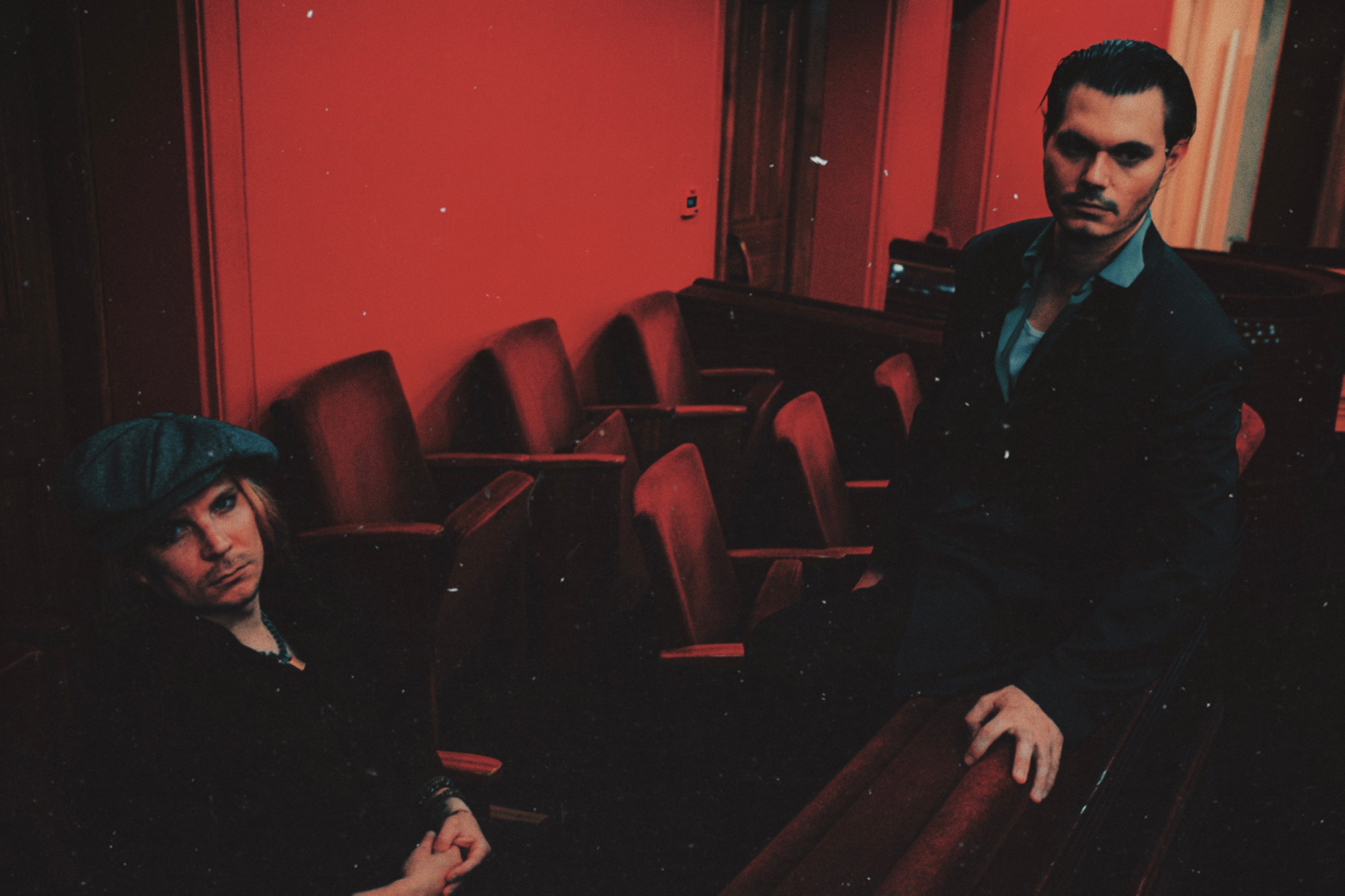
In Finland, a distinctive band has emerged, shaping its own sound between northern melancholy and modern alternative influences. Vauxdeville stand apart by fusing new wave, surf inspired guitars, and atmospheric songwriting into what they call “Arcticana,” a style rooted in Finnish musical tradition yet open to contemporary expression.
The band was founded in late 2023 by Mitja Toivonen and Matias Melleri, bringing together a vision of music that feels both nostalgic and forward-looking. Their sound blends traditional elements with modern textures, creating something haunting, cinematic, and emotionally resonant within the current alternative landscape.
Vauxdeville are managed by Backbone Management, known for working with artists such as Ville Valo, Blind Channel, The Rasmus, Swallow the Sun, SIKTH, and Ensiferum.
This week, I spoke with Matias about their creative vision, their identity, and the ideas shaping their emerging sound.
Firstly, what inspired you both to become musicians?
How did Vauxdeville form in late 2023?
We’ve actually known each other since the late 2000s. We first met at a band competition organized by Finnish Radio Rock. Back then, Mitja was playing in Santa Cruz and I was in a band called G.L.A.M., so we were both already part of that small ’80s rock inspired scene in Helsinki.
We hit it off right away, and one funny thing we discovered early on was that we shared one of our biggest influences, the Rolling Stones. Both of our mothers had been huge fans since their teenage years and had introduced us to that music very early on, so that was a cool connection.
Neither of our bands did particularly well in the competition, but we ended up gaining something much more valuable, a lifelong friendship.
Over the years, we both played in different bands, but every now and then we ended up on the same stage. We’d also get together with other musicians from the scene and play covers, anything from Hellacopters to Social Distortion.
By late 2022, we both found ourselves without a band or a clear project. I had been working professionally for about ten years producing and writing songs for other artists, and Mitja’s latest band, Bodom After Midnight, had come to an end following the very unfortunate passing of Alexi Laiho.
At the start of 2023, I had been thinking about writing music just for my own enjoyment again. We’d always talked about doing something together, and eventually it just felt like the time was right, we were both willing and able to do it.
One of the first demos I played for Mitja was a song called “Lonely Eyes,” which ended up becoming our first release as Vauxdeville in 2025. From there, things just clicked. The songwriting felt very natural from the beginning. Initially, I focused more on the music while Mitja handled the lyrics, but as things developed, we both started contributing to everything, music and lyrics, depending on what each song needed.
What does music mean to you personally?
That’s a big question. For me, music is really a way of life, it’s something I couldn’t live without.
I’ve been around music pretty much every day since I was about seven years old, when I got my first guitar. It’s always been there in one way or another. That said, it hasn’t always been purely a positive thing.
There was a period when I was writing professionally for other artists, and at times it started to feel less like being a songwriter and more like being some kind of industrial designer. You’re working within a very narrow framework where the song has to fit not only a certain structure, but also a specific artist and market.
You end up making compromise after compromise because of how the pop industry works. You’re usually writing with one or two co-writers, and often the artist only comes into the process later, after a publisher or label A&R has already approved the song and maybe even matched it with an artist. Then the artist brings in their own ideas and direction, which is completely fair, but by that point the song might already have gone through so many changes that it barely resembles what you started with.
Doing that almost every day for years can really wear you out. You either burn out, or you’re one of the very small percentage who make it big, and even that is a pretty subjective thing.
That being said, I’ve learned a huge amount from working with so many talented writers, and I’ve also gained a lot of insight into how the industry works.
Personally, though, music means so many things. It’s a way to express whatever feelings or thoughts you have at any given moment through music and lyrics. There’s no better feeling than getting a song finished and then performing it in front of an audience. I can speak for both of us when I say we’re the kind of musicians who love the performance side of it the most. That connection with the audience is really what it’s all about.
What’s something about Vauxdeville that listeners wouldn’t guess just from hearing your music?
A funny example of this actually came up with our song “Hold Me, Kiss Me..” during Yle’s record panel, the Finnish national public broadcasting company’s review panel. One of the jury members felt that the song had been heavily edited or digitally processed in production. The interesting part is that there was actually zero digital “fixing” like that, it was produced in a pretty old school way using mostly analog equipment.
That said, I don’t think it’s that important these days how a record is made. What matters more is how it makes the listener feel and whether it has something real to offer for people listening today.
Which artists or albums have had the biggest impact on shaping your sound, and why?
I’d say overall The Rolling Stones have probably been the biggest constant influence for us. But to name a few more specific ones, Cage the Elephant’s Tell Me I’m Pretty stands out because of its clever songwriting, combined with the slightly retro but still fresh production by Dan Auerbach from The Black Keys. Kent’s Isola is another big one for us, mainly because of its melancholic ’90s Scandinavian indie sound, which was something really unique at the time, and still is. And The Cure’s Seventeen Seconds is where a lot of our post-punk and early gothic rock influences really come from, especially in terms of atmosphere, minimalism, and mood.
How would you describe the current Finnish alternative music scene?
It’s still a pretty small scene, but I do feel like it’s growing all the time, which is definitely a positive thing. There are a lot of new bands and artists coming up in Finland right now, and that’s always exciting to see.
At the same time, I think the mainstream side has become a bit more narrow, and major labels often seem to focus on quick artist development rather than long term growth. But who knows where things will go next.
Still, it’s really encouraging that there are more and more artists who can build a career independently without needing the major label system. That keeps the scene moving forward.
Do you draw inspiration from artists from Finland, or the Baltic States 7. Is Finnish identity important to you as artists? Has local culture, landscape, or atmosphere influenced your music or image?
For us, it’s important that you can hear in our sound that we’re from Finland. When we say Finnish, we really mean our home city, Helsinki, and the unique atmosphere and scenery it offers. Too often Finland gets reduced to just snow-covered Lapland, when in reality the southern Finnish environment, where we live and were born, has its own very different character and identity.
One Finnish act that has definitely influenced us is Agents and Esa Pulliainen. Their sound and approach to guitar playing in particular has been a big inspiration. And to name a few more, Apulanta from their ’90s and early 2000s era really meant a lot during my teenage years. And of course HIM with Ville Valo, especially their late ’90s and early 2000s albums, had a huge impact as well.
What challenges or barriers have you faced as a band coming out of Finland?
I’d say the biggest challenge is probably that we don’t really have any labels or structures focused on export. Most labels tend to work mainly with domestic Finnish-language music, so it can be quite difficult to break outside of Finland.
That’s why it’s really important to have strong management behind you. Luckily, we have Katja Vauhkonen at Backbone Management, and the team at Backbone Management is doing a lot of great work when it comes to supporting Finnish music and helping push it internationally.
Are there any clichés or trends in modern music that you actively try to avoid?
I’d say we try to do our own thing and keep the music as timeless as possible, rather than chasing trends. We’re not really interested in going viral for one moment or following whatever’s happening right now.
Instead, the focus is more on slowly building something and finding the right audience, people who genuinely connect with the music and want to stay with us for the long run.
What does your song writing process look like? Do you tend to write collaboratively in the same room or bring ideas individually?
It varies quite a lot, but I’d say it often starts with a conversation between us about combining different musical ideas and trying to create something fresh.
Usually the next step is that I’ll bring in some melodic ideas, a chord progression, or sometimes both, and then we start building it together from there. Other times I might come in with a more complete demo, maybe even with some hook ideas already in place, and then Mitja starts shaping the lyrics around it.
But once we get to production and finishing the song, we always do that together.
Do you remember the moment or maybe the first song you wrote together that made you think, “this is our sound”?
I’d say it was the song “Lonely Eyes,” which also became our first release and kind of our calling card in the beginning. That was probably the first time it really felt like, “okay, this is something that represents us.”
But at the same time, we don’t want to get too attached to just one defined sound. Who knows what the future will bring, maybe a full electronic record or even a piano based album next. We like the idea of keeping things open.
Outside of your core sound, do you find inspiration in other genres or unexpected sources? Maybe grunge, jazz, classical or any type of art?
Most definitely, we’re quite omnivorous when it comes to art. Inspiration can come from a lot of different places outside of music as well.
I personally get a lot of ideas from paintings and photography. Just recently I discovered the work of Brazilian artist Juarez Machado, and it was really inspiring. It actually helped kick-start some new ideas after a pretty dry period creatively.
What can fans expect next from Vauxdeville?
New music is definitely coming. The recent release is called “No Sugar,” and it was released on the 15th of May. After that, the plan is to finish the album and aim to release it towards the end of the year.
Beyond that, we’re also looking at doing Vauxdeville’s first shows outside Finland in 2027.
Follow the band on their channels:
Instagram: https://www.instagram.com/vauxdevilleband
Facebook: https://www.facebook.com/Vauxdeville
YouTube: https://www.youtube.com/@Vauxdeville


